
♨️ The Spa Capital: Thermal Baths
Budapest sits on a network of thermal springs, making spa culture an essential part of daily life:
- Széchenyi Thermal Bath: The largest medicinal bath in Europe, located in City Park. Its yellow neo-baroque buildings and massive outdoor pools are iconic.
- Gellért Baths: Famous for its stunning Art Nouveau interior and mosaics. It's like swimming in a cathedral.
- Rudas Baths: A traditional Ottoman-style hammam dating back to the 16th century, featuring a rooftop hot tub with a view of the river.
🏰 Buda vs. Pest: Exploring Both Sides
The two sides of the city offer completely different experiences:
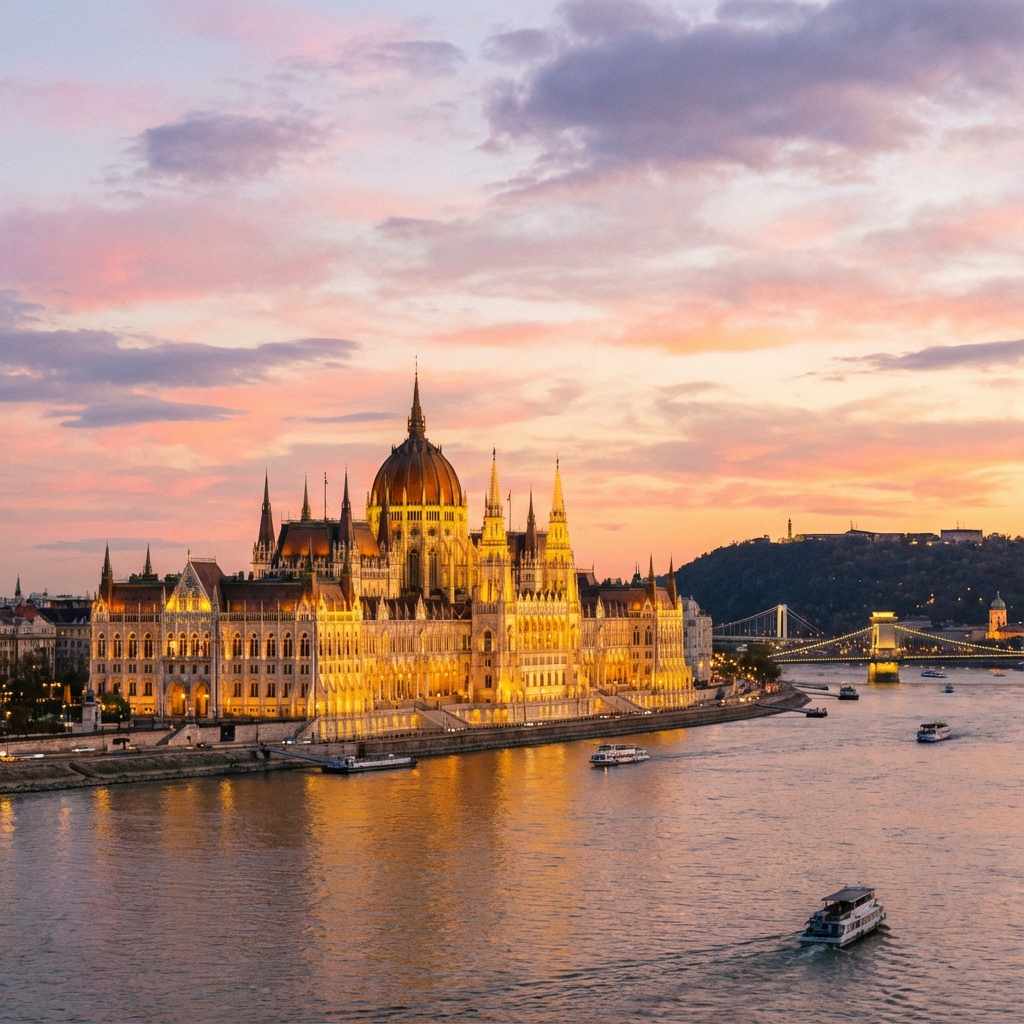
- Buda Castle District: Walk the cobblestone streets to the Matthias Church and Fisherman's Bastion. The fairytale towers offer the most famous panoramic view of the Parliament building across the river.
- The Parliament Building: One of the largest and most magnificent government buildings in the world. Booking a tour in advance is highly recommended.
- Andrássy Avenue: Often compared to the Champs-Élysées, this UNESCO-listed avenue leads from the city center to Heroes' Square, lined with designer boutiques and grand townhouses.
🍹 Ruin Bars & Culinary Delights
Budapest's nightlife and food scene are unlike anywhere else in the world:
- Ruin Bars: Unique bars built in the courtyards of abandoned buildings, furnished with vintage decor and street art. Szimpla Kert and Instant-Fogas are the most famous.
- Hungarian Gastronomy: Beyond Goulash, try *Hortobágyi palacsinta* (savory pancakes) and finishing with a *Kürtőskalács* (Chimney Cake) from a street stall.
- Great Market Hall (Nagyvásárcsarnok): The best place to buy authentic paprika, local sausages, and try home-style snacks on the upper floor.
🎒 Practical Tips for 2025
- Budapest Card: If you plan to visit many museums and use public transport frequently, the official city card can be a great value saver.
- Currency: Hungary uses the Forint (HUF). Cards are widely accepted, but it's good to have small change for public restrooms and some market stalls.
- Transport: The metro system (including the M1, the oldest in continental Europe) and the scenic tram #2 along the river are excellent ways to get around.
❓ FAQ: Visiting Budapest
Is Budapest a cheap city?
Budapest is generally more affordable than Western European capitals, especially for dining and public transport, though prices in the main tourist areas have risen in recent years.
Should I stay on the Buda or Pest side?
Pest is the heart of the action, close to bars, restaurants, and shops. Buda is quieter, more residential, and romantic. Most first-time visitors prefer Pest for its convenience.