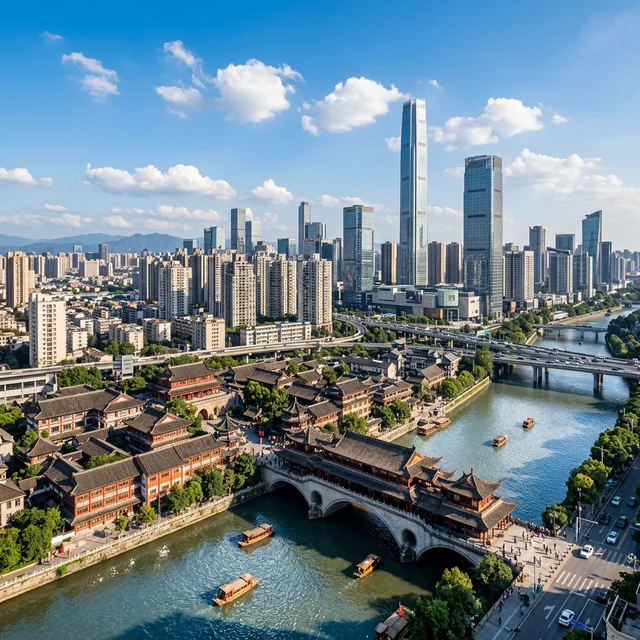
🏰 UNESCO Medina & Historic Heritage
Tunis’s architectural treasures showcase North Africa’s Mediterranean legacy and Arab heritage.
- Medina of Tunis (UNESCO): The Medina — Tunis’s old city, awarded UNESCO World Heritage status in 1979 — is a remarkably intact medieval Islamic city of 700 monuments, 200 mosques, and hundreds of artisanal workshops (souks) organized by trade in a pattern unchanged since the 9th century. Getting intentionally lost in the souks is half the pleasure: turn away from the tourist souvenir route and follow alleys of perfumers, leather workers, textile merchants, and coppersmiths. The medina is most atmospheric in the early morning before crowds arrive and at dusk when families take the evening stroll.
- Bardo National Museum: Housed in a former Ottoman palace on the outskirts of central Tunis, the Bardo holds the world’s largest collection of ancient Roman mosaics — floor and wall mosaics salvaged from villas and public buildings across Roman North Africa (Carthage, Dougga, El Jem). The mosaics range from simple geometric patterns to complex mythological scenes of extraordinary detail and color. The museum’s layout in the old palace rooms adds an additional layer of visual interest. Allow at least 3 hours; the collection is overwhelming in scope.
- Zitouna Mosque: The Great Mosque of the Olive Tree has been the spiritual and intellectual center of Tunis since the 8th century — its adjacent university was one of the world’s first, predating Bologna and Paris. Non-Muslim visitors can enter the outer courtyard (which gives a sense of the prayer hall’s scale through the doorways) but not the prayer hall itself. The best view of the mosque’s minaret is from the rooftop terrace of the surrounding souk buildings, accessible via several cafe entrances.
- Cathédrale Saint-Vincent-de-Paul: Built in 1882 during the French Protectorate period on what was then the city’s main colonial avenue (now Avenue Habib Bourguiba), this neo-Romanesque cathedral stands directly opposite the entrance to the Medina — a visual representation of Tunis’s layered history. The cathedral fell into disuse after independence but has been gradually restored and is open for visits. The interior mixing of Romanesque structure with Byzantine-influenced decoration reflects the colonial ambition of its builders.
- Bab el Bhar (Sea Gate): This 16th-century gateway — once the literal entrance from the Mediterranean harbor into the Medina — now marks the transition between the French-era colonial city and the ancient Islamic city. Standing at the gate looking down Avenue Habib Bourguiba on one side and into the souks on the other gives the clearest architectural illustration of Tunis’s dual identity. The gate’s Arabic inscription commemorates its construction under Ottoman rule.
🏛️ Carthage Ruins & Ancient Civilizations
Tunis’s historical landmarks showcase the ancient Carthage civilization’s legacy.
- Carthage Archaeological Site (UNESCO): The ruins of the great Phoenician and later Roman city of Carthage are scattered across a residential suburb 15 km northeast of central Tunis — the lack of a single large site to visit surprises many visitors expecting the grandeur of Rome or Athens. Instead, the UNESCO World Heritage designation covers several discrete sites: the Antonine Baths, the Punic Ports, the Byrsa Hill museum, and the tophet (child sacrifice site, now disputed). A taxi or the TGM suburban rail line connects the sites; a full day allows you to see them all.
- Byrsa Hill: The hilltop acropolis of ancient Carthage, where the Phoenician founders built their first settlement around 814 BC, offers sweeping views over the Bay of Tunis and, on clear days, to the mountains beyond. The Musée de Carthage on the summit houses artifacts excavated from the site — jewelry, ceramics, votive objects, and architectural fragments — and does the best job of any Tunis museum at explaining the chronological layers of Phoenician, Punic, and Roman Carthage.
- Carthage Museum: The museum on Byrsa Hill focuses on the three successive civilizations that occupied this site, displaying Phoenician alabaster figurines, Punic grave goods, and Roman sculpture found in situ. The juxtaposition of these artifacts — sometimes in the same display case — makes the layering of cultures visible in a way the outdoor ruins alone cannot convey.
- Antonine Baths: Dating from the 2nd century AD under Emperor Antoninus Pius, these were the third-largest Roman baths in the empire (after those of Caracalla and Diocletian in Rome). The scale of the ruins — enormous columns, hypocaust heating systems, and a coastal setting above the Mediterranean — give the most powerful sense of Roman Carthage’s wealth and ambition. The best view of the complex is from the elevated terrace on the north side, which also looks across the bay.
- Punic Ports: Two ancient artificial harbors — one rectangular (commercial) and one circular (military, for the Carthaginian war fleet) — are still partially visible as water features in the modern residential area. The circular harbor’s island, where the admiral’s headquarters stood, can be visited at the Oceanographic Museum. The ports were the engineering marvel that made Carthage the dominant naval power in the western Mediterranean for centuries.
🏖️ Coastal Villages & Mediterranean Lifestyle
Tunis’s coastal areas showcase North Africa’s Mediterranean beauty.
- Sidi Bou Said: Perched on a cliff above the Gulf of Tunis, 20 km northeast of the city center (accessible by TGM rail), this village of blue-and-white painted houses, bougainvillea-draped walls, and cobblestone streets has attracted artists and intellectuals since Paul Klee and August Macke painted here in 1914. The village’s combination of Arabic-Andalusian architecture and Mediterranean light creates a visual character found nowhere else in North Africa. The hilltop cafe, Café des Nattes, has served mint tea (with pine nuts, as is tradition) to travelers for a century. Visit on a weekday morning to avoid weekend crowds.
- Gammarth: The upscale northern suburb beyond Sidi Bou Said has developed into Tunisia’s most affluent residential area, with luxury hotels along a cliff-top corniche and beaches below. The area is popular with Tunisian upper-class families and international visitors staying at the large beach hotels. The seafood restaurants along the main road serve excellent grilled fish and are popular with Tunisian families on weekends.
- La Marsa: The terminal station of the TGM line, La Marsa is a relaxed coastal town with a broad sandy beach, a pleasant main square (Place Saf Saf), and a good concentration of cafes and restaurants. The town has been a summer escape for Tunis residents since the 19th century and retains a leisurely, neighborhood character. The beach here is one of the most accessible from central Tunis and popular with local families.
- Mediterranean Corniche: The coastal road running from La Goulette (the port at the entrance to the Tunis lake) northward through La Marsa and Gammarth provides scenic views of the Gulf of Tunis with the mountains of Cape Bon in the distance. The southern section near La Goulette is famous for its summer seafood restaurants — dozens of establishments serving fried fish, grilled octopus, and merguez spill onto terraces above the water during the summer months.
- Tunis Beaches: The public beaches around La Goulette, Hammam-Lif, and the northern coast are free and accessible by public transport. Water quality varies — the northern beaches (La Marsa, Gammarth) are significantly cleaner than those near the industrial port. The beach season runs April through October; outside these months the Mediterranean is cool but the beaches are beautifully empty.
🍲 Tunisian Cuisine & Mediterranean Flavors
Tunis’s food scene represents the pinnacle of North African culinary excellence.
- Couscous & Tajine: Couscous — steamed semolina with vegetables, chickpeas, and slow-cooked lamb or chicken — is Tunisia’s national dish and the centerpiece of family meals, typically served on Fridays (the holy day) when families gather. The Tunisian version uses a spicier, tomato-heavier broth than Moroccan couscous. A traditional tajine in Tunisia is quite different from the Moroccan conical-pot version — it’s a firm egg-and-vegetable cake (closer to a frittata), typically served cold as a starter.
- Harissa & Spices: Tunisia produces the most assertively spicy food in the Maghreb, and harissa — a paste of dried red chili, garlic, coriander, and caraway — is added to nearly everything. The national brand Dea is ubiquitous, but the best harissa is homemade or from small producers in the Nabeul region. Visitors unused to spicy food should specify “moins piquant” (less spicy) when ordering; even the mild version has kick.
- Brik & Pastries: Brik is Tunisia’s signature street food — a thin pastry (warqa dough, related to filo) wrapped around a whole egg, tuna, parsley, and capers, then deep-fried. The challenge is eating it without the runny yolk escaping. The best brik stalls in the Medina serve them fresh from the fryer for a few dinars. Bstilla (a sweet-savory pastry with pigeon or chicken, almonds, and cinnamon) reflects Tunisia’s Andalusian heritage.
- Lablabi & Soups: Lablabi is Tunis’s working-class breakfast dish — a bowl of chickpeas in a garlicky cumin broth, served with a raw egg stirred in, stale bread, harissa, olive oil, and capers. The dish is assembled at the table from its components and eaten with a spoon. The best lablabi is found at hole-in-the-wall restaurants in the Medina and Central Market area, open from early morning. It costs very little and is deeply satisfying.
- Baklava & Sweets: Tunisian sweets reflect the country’s layered heritage — Arabic, Ottoman, Andalusian, and Jewish traditions all contributed to the pastry culture. The Central Market (Marché Central) in the ville nouvelle has excellent pastry stalls selling baklava, makroud (semolina pastry stuffed with date paste, from Kairouan), and ghraïba (almond shortbread). Tunisian tea houses serve these with green mint tea, strong espresso, or fresh pomegranate juice.
- Mediterranean Seafood: Tunisia’s long coastline produces excellent seafood — red mullet, sea bream, octopus, and squid are typical. The port district of La Goulette specializes in fried fish restaurants; for grilled seafood of better quality, the restaurants in Sidi Bou Said and the northern coastal villages are the best option. Look for menus listing what arrived that morning rather than a fixed menu — freshness is the key variable.
🎭 Arab Spring Legacy & Modern Culture
Tunis’s cultural institutions showcase Tunisia’s revolutionary spirit and artistic excellence.
- Arab Spring Memorials: Avenue Habib Bourguiba — Tunis’s main colonial-era boulevard, often compared to Paris’s Champs-Élysées — was the epicenter of the 2010–11 Jasmine Revolution that toppled President Ben Ali and triggered the Arab Spring across the region. The events unfolded in front of the theatre, the cathedral, and the interior ministry at the boulevard’s far end. A small memorial near Mohamed Bouazizi’s street vendor location in Sidi Bouzid (3 hours from Tunis) marks the origin of the uprising, but the avenue itself remains the symbolic heart of Tunisia’s democratic transition.
- Tunisian National Theater: The Municipal Theatre on Avenue Habib Bourguiba, built in French colonial style in 1902, is Tunisia’s most important performing arts venue, hosting opera, ballet, drama, and concerts. The programming blends French-language and Arabic productions. Ticket prices are extremely affordable by European standards, and the restored interior is worth seeing even without a show — check the schedule on arrival.
- Contemporary Art Galleries: The B’chira Art Center in the Medina and the El Foundouk gallery district host rotating exhibitions of Tunisian contemporary art — a vibrant scene that emerged strongly after 2011 when censorship was lifted. The art often engages directly with political themes, gender, identity, and the revolutionary moment. Several galleries offer pieces for purchase at prices far below European gallery equivalents.
- Traditional Music & Dance: Malouf — the Andalusian-Arabic classical music tradition brought by Muslim and Jewish exiles from Spain in 1492 — is Tunisia’s most distinctive musical heritage. Tunis’s Rashidiyya Institute is the primary school and performance venue for malouf; concerts are held periodically and are open to the public. The music uses quarter-tone scales and improvisation techniques that sound unlike anything in Western musical tradition.
- Calligraphy & Islamic Art: The souks of the Medina preserve active workshops where craftsmen practice traditional arts: tile-making (zellij), plasterwork carving, wood inlay (marquetry), and calligraphy. The Khomsa hand (the Hamsa of Tunisian folk tradition) and geometric Berber patterns appear across textiles, jewelry, and ceramics. Several craft schools offer demonstrations and short courses for visitors.
🚇 Practical Tunis Guide
- Best Time to Visit: April-June or September-November for mild weather and cultural festivals, or December-March for winter sun but expect occasional rain. Tunis offers Mediterranean climate with hot summers. Mild season is April-November. Hot season is June-September. Temperature varies moderately. Festivals are spectacular.
- Getting Around: Extensive public transport with metro and buses. Taxis and ride-shares plentiful. Traffic can be heavy. The transport is extensive. The metro is modern. The buses are frequent. The taxis are convenient. The traffic requires patience.
- Planning & Tickets: Book major attractions online but many are affordable. Use ride-shares for transportation. Stay hydrated in Mediterranean climate. The attractions are accessible. The planning is straightforward. The tickets are affordable. The climate requires preparation.
- Safety & Etiquette: Generally safe in tourist areas but use common sense in crowded places. Tunisians are friendly and welcoming. Respect religious customs. Bargain politely at souks. Dress modestly at religious sites. The culture is hospitable. The people are warm.
- Cost Considerations: Affordable for North Africa standards but higher in tourist areas. Budget €40-80 per day. Street food inexpensive. Local dining reasonable. Luxury experiences costly. The city offers good value for North Africa.
- Cultural Notes: Tunis represents Tunisia’s cultural diversity and revolutionary spirit. The city embodies Arab tradition. Tunis is vibrant yet historic. The people are diverse. The culture is inclusive.
- Language: Arabic and French primary, with Tunisian Arabic widely spoken. Tunis is multilingual. The Arabic is primary. Communication is possible. The diversity is linguistic.
- Time Zone: Central European Time (CET), UTC+1. Daylight savings time observed.