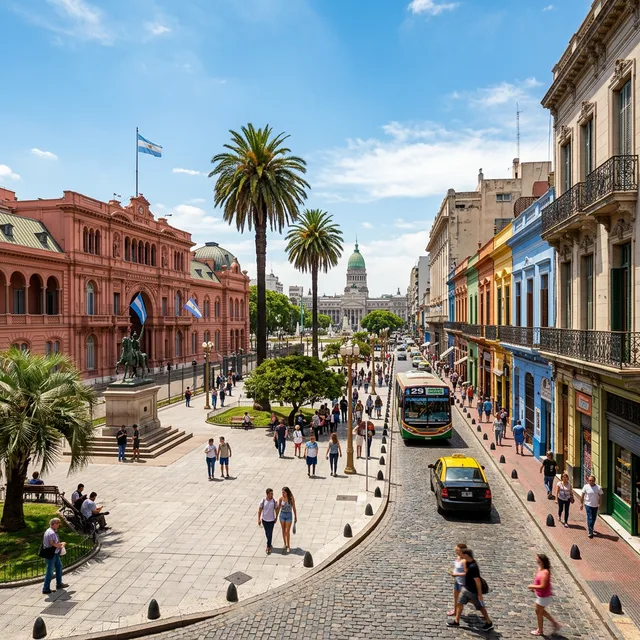
🏛️ European Architecture & Historic Districts
Buenos Aires’ European heritage is evident in its stunning architecture and grand boulevards, earning it the nickname ‘Paris of South America.’
- Plaza de Mayo & Casa Rosada (Pink House): The heart of Buenos Aires and Argentina’s political center. The iconic pink presidential palace has hosted famous figures like Eva Perón. The surrounding plaza is where major historical events unfolded and where the Mothers of the Plaza de Mayo still gather every Thursday.
- Recoleta Cemetery: One of the most beautiful cemeteries in the world, featuring ornate mausoleums and the final resting place of Eva Perón. The cemetery is like an outdoor sculpture garden with incredible architecture from the 19th century.
- La Boca District: Buenos Aires’ most colorful neighborhood with brightly painted buildings and cobblestone streets. Home to the famous Boca Juniors football club and the Caminito street, which inspired the tango of the same name. Don’t miss the street artists and the working port atmosphere.
- San Telmo Market (Mercado de San Telmo): One of the oldest markets in Buenos Aires, housed in a beautiful 19th-century building. Browse antiques, art, and local crafts while enjoying the historic architecture and occasional tango performances.
- Teatro Colón: One of the world’s most beautiful opera houses, with stunning architecture and acoustics. Take a guided tour to see the lavish interiors and learn about its history as a center of Argentine culture.
🎭 Tango Culture & Performing Arts
Tango is the soul of Buenos Aires, and the city offers countless opportunities to experience this passionate dance form.
- Tango Shows in Traditional Venues: Experience professional tango performances at historic venues like El Viejo Almacén or Café Tortoni. These shows combine dance, music, and sometimes dinner for an unforgettable cultural experience.
- Milongas (Tango Dance Halls): Join locals for authentic tango dancing at traditional milongas. Centro Región Leonesa or Sunderland Club offer a more genuine experience than tourist shows. Learn basic steps or just watch the incredible dancers.
- Tango Walking Tours: Explore the neighborhoods where tango originated, including La Boca, San Telmo, and Barracas. Learn about the dance’s history from African, European, and criollo influences.
- Tango Museums & Cultural Centers: Visit the Museo Casa Carlos Gardel to learn about tango’s most famous singer, or the Fundación Julio Bocca for contemporary interpretations of the dance.
- Contemporary Tango Scene: Buenos Aires has evolved tango into modern forms. Check out experimental shows at Centro Cultural Borges or contemporary performances at modern venues.
🍽️ Argentine Cuisine & Culinary Excellence
Buenos Aires is a food lover’s paradise, particularly known for its beef and wine culture.
- Asado (Argentine BBQ): Argentina’s national dish and culinary tradition. Experience an authentic asado at a local parrilla or join a cooking class. The slow-cooked beef, chorizo, and morcilla (blood sausage) are legendary.
- Steakhouses in Puerto Madero: World-class steakhouses like La Cabrera or Don Julio serve some of the best beef in the world. Try different cuts like bife de chorizo, ojo de bife, or entraña.
- Empanadas & Street Food: Crispy pastries filled with meat, cheese, or vegetables. Every neighborhood has its favorite empanada spot. Try them with chimichurri sauce for the full Argentine experience.
- Medialunas & Cafes: Buenos Aires’ version of croissants, perfect with coffee at traditional cafes. Café Tortoni, dating from 1858, is the oldest cafe in the city and a cultural institution.
- Dulce de Leche & Alfajores: Argentina’s national sweet - caramelized milk used in countless desserts. Try alfajores (cookie sandwiches) or ice cream flavored with dulce de leche.
- Malbec Wine & Bodegas: Argentina produces world-class Malbec wine. Visit bodegas (wine bars) in Palermo or take a wine tour to Mendoza. The city has an incredible selection of Argentine wines.
🏙️ Vibrant Neighborhoods & Modern Life
Buenos Aires’ diverse neighborhoods each offer their own character and attractions.
- Palermo: Buenos Aires’ trendiest neighborhood with boutique shops, art galleries, and a young, creative vibe. Palermo Soho and Palermo Hollywood are filled with street art, cafes, and design stores.
- Puerto Madero: The modern waterfront district with luxury hotels, fine dining, and contemporary architecture. The Puente de la Mujer (Woman’s Bridge) by Calatrava is a modern landmark.
- Belgrano & Núñez: Upscale residential areas with beautiful parks, museums, and a more relaxed atmosphere. The Jardín Japonés (Japanese Garden) in Belgrano is a peaceful oasis.
- Almagro & Abasto: Historic neighborhoods with beautiful architecture and local markets. The Abasto Shopping mall was once a historic market and is now a modern shopping center.
- Retiro District: The financial hub with modern skyscrapers and the beautiful Plaza San Martín. The nearby Retiro train station is a beautiful example of British architecture.
🎨 Art, Museums & Cultural Institutions
Buenos Aires boasts world-class museums and a thriving contemporary art scene.
- Museo Nacional de Bellas Artes: Argentina’s premier art museum with works by European masters and Latin American artists. The collection includes pieces by Goya, Monet, and local artists like Quinquela Martín.
- MALBA (Museo de Arte Latinoamericano de Buenos Aires): Focuses on Latin American art from the 20th century. The modern building itself is a work of art, designed by Peruvian architect Clorindo Testa.
- Museo Evita: Dedicated to Eva Perón’s life and legacy. Located in her former home, it offers insight into Argentina’s complex political history and the Perón era.
- Contemporary Art Scene: Buenos Aires has a vibrant contemporary art scene. Visit art galleries in Palermo or attend openings at Centro Cultural Recoleta. The city hosts major art fairs like arteBA.
- Street Art & Murals: Buenos Aires has incredible street art, particularly in neighborhoods like Palermo and Barracas. Free walking tours explore the city’s urban art scene.
🌳 Parks, Nature & Outdoor Activities
Despite being a massive city, Buenos Aires offers beautiful green spaces and outdoor activities.
- Parque Tres de Febrero (Bosques de Palermo): Buenos Aires’ largest park with lakes, rose gardens, and recreational areas. Perfect for picnics, boating, or renting bikes.
- Jardín Botánico Carlos Thays: A beautiful botanical garden with exotic plants, greenhouses, and walking paths. The Art Nouveau greenhouse is particularly stunning.
- Río de la Plata Waterfront: The city’s extensive waterfront along the Rio de la Plata estuary. Costa Salguero offers beaches, parks, and modern developments.
- Equestrian Culture: Experience Argentina’s gaucho heritage at estancias (ranches) just outside the city, or watch polo matches at the Campo Argentino de Polo.
- Bird Watching & Nature: Buenos Aires has diverse bird species. The Reserva Ecológica Costanera Sur is a nature reserve with hiking trails and wildlife viewing.
🚇 Practical Buenos Aires Guide
- Best Time to Visit: Spring (September-November) or fall (March-May) for mild weather and fewer crowds. Summers are hot and humid, winters mild. Avoid January when many locals vacation elsewhere.
- Getting Around: Extensive subway (Subte) and bus networks, plus ride-sharing apps like Uber and Cabify. The city is walkable in central areas. Buy a SUBE card for public transport.
- Safety & Etiquette: Generally safe for tourists, but stay aware in crowded areas. Porteños (Buenos Aires residents) are friendly but direct. Learn basic Spanish phrases - English is spoken in tourist areas.
- Currency & Costs: Argentine Peso (ARS). More affordable than many Western cities but inflation affects prices. Budget $80-150 per day. Street food and local markets are inexpensive.
- Cultural Notes: Buenos Aires has a strong European influence visible in architecture, cafes, and social customs. Football (soccer) is a religion here - don’t miss a Boca Juniors or River Plate match.
- Language: Spanish is primary, with Italian influences. English widely spoken in tourist areas and hotels. Many signs are bilingual.
- Time Zone: Argentina Time (ART), UTC-3. No daylight savings in most areas.